





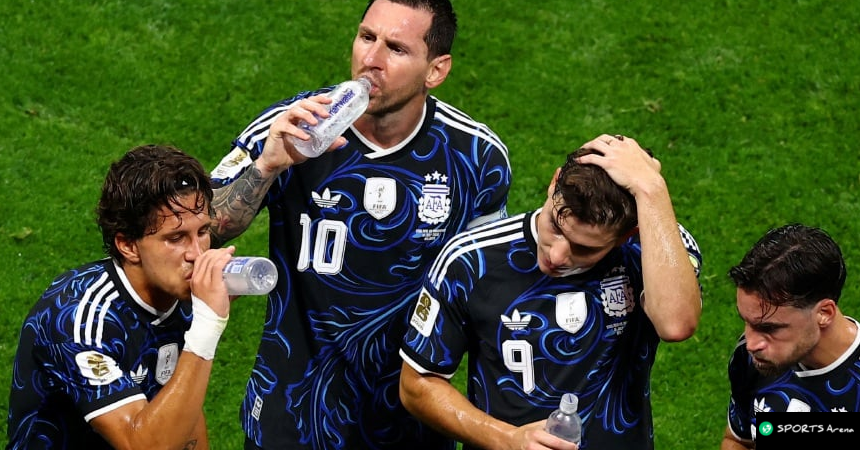
Hydration breaks were made mandatory in every match for the first time at this year’s World Cup, sparking considerable debate and criticism from the outset. However, Arsène Wenger believes the breaks did not affect the pace of play or the outcome of matches.
FIFA’s head of global football development said the world governing body will evaluate the rule in detail after the tournament. Wenger addressed the new rule at a press conference ahead of the World Cup final.
“Many people didn’t like this break, so its impact will be analyzed at the end of the tournament. I don’t think it changed the outcome of the competition. But we organize football for the audience, and a decision will be made after considering all aspects.”
FIFA mandated a three-minute hydration break in each half at this year’s World Cup to protect players from the summer heat across the United States, Canada, and Mexico. The rule applied to every match, regardless of weather, temperature, or venue — even indoor stadiums in Atlanta, Dallas, Houston, and Vancouver followed the same policy, ensuring consistency across all matches.
FIFA’s decision was controversial from the start, with fans in several stadiums booing during the breaks. Some former players have also criticized the rule, fearing it could disrupt the game’s rhythm.
According to Wenger, however, the breaks did not actually affect match outcomes. He said the pauses were genuinely necessary in matches played under extreme heat, but were made mandatory across all matches — regardless of conditions — to ensure the same rules applied uniformly throughout the tournament.
Another source of controversy surrounding the hydration breaks is their commercial dimension. They have become a new revenue stream for broadcasters, who now have the opportunity to air advertisements during these scheduled pauses.
According to The Hollywood Reporter, Fox — which broadcasts the World Cup in the United States — is expected to earn at least $250 million from advertising during hydration breaks alone (more than 30 billion taka in Bangladeshi currency).
As a result, the issue is expected to feature prominently in future discussions over broadcasting rights.
The concept of such breaks in football isn’t new. The first “cooling break” was introduced during the intense heat of the 2014 World Cup in Brazil, and most leagues around the world now permit such breaks based on specific temperature thresholds or referee discretion.
However, this marks the first time FIFA has mandated hydration breaks in every match, regardless of weather conditions. The organization will decide the rule’s future after reviewing its overall effectiveness at the conclusion of this World Cup.