



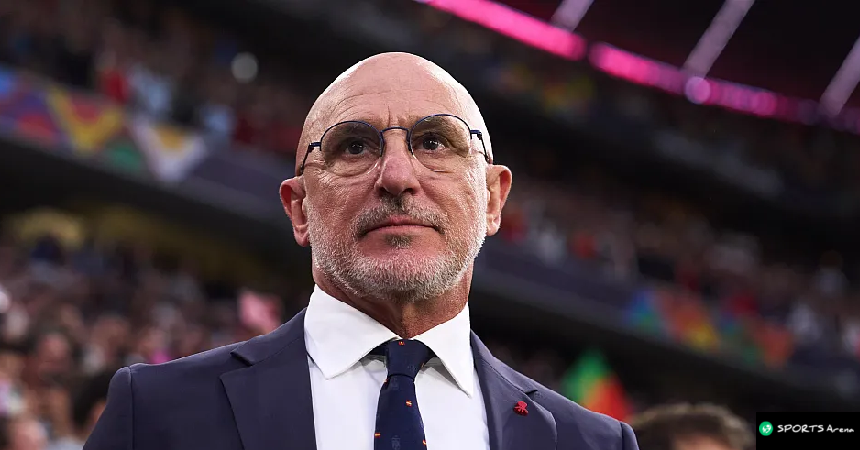
On the night before the World Cup final against Argentina, Luis de la Fuente stands just one match away from football’s most beloved trophy. But he didn’t build today’s star-studded Spain side — featuring the likes of Lamine Yamal and Rodri — overnight. He has been in charge of this footballing project since 2013, building it up piece by piece. Starting with the youth setup, he has guided these players all the way to the biggest stage in the sport. And now, in the dugout, he faces Lionel Scaloni — a coach he himself once mentored.
National team coaches rarely get much time with their players — a few training sessions in the fall, a handful of matches in spring, and a short camp before a major tournament. That’s often all there is. Players who spend most of the year with different clubs, in different countries, under entirely different tactical systems, must somehow be woven together in just a few days. Luis de la Fuente, however, has taken a different path.
He didn’t take charge of the Spanish national team as some kind of “savior,” nor did he try to build a new footballing empire within weeks. He simply stayed by these players’ sides for a very long time. When De la Fuente joined the Spanish football federation’s setup in 2013, Lamine Yamal was just five years old, Rodri had yet to make his senior debut, and Marc Cucurella had only just entered Barcelona’s academy. Thirteen years later, all three stand together in a World Cup final.
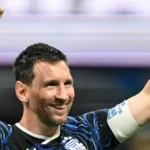
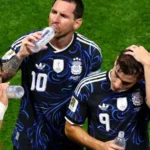
Argentina will face Spain at the New York-New Jersey stadium — the reigning European champions against the current world champions. Yamal versus Lionel Messi. De la Fuente versus his former student, Scaloni. But the real story of this final isn’t just the clash of stars and coaches — it’s the story of a man who didn’t assemble his team in a month or a year, but built it gradually, over nearly half the professional careers of some of his players.
De la Fuente’s coaching career began humbly, far from the football elite’s spotlight. He managed youth teams at Numancia, Sevilla, and Athletic Bilbao, coached Bilbao’s reserve side, and later took charge of third-division club Alavés. He had no Champions League title on his résumé, no record of multi-million-euro transfers.
Before he began winning tournament after tournament on the international stage, De la Fuente’s greatest strength as a coach wasn’t extraordinary talent or revolutionary tactics — it was boundless patience, integrity, and a remarkable ability to bring out the best in young players. In time, that would prove more than enough to restore the national team’s fortunes.
Those ’78 Mondays’ of exile
On October 16, 2011, after just 11 league rounds, La Liga club Alavés sacked De la Fuente. The team sat eighth in the Segunda B table at the time — with four wins, three draws, and four losses — and the club’s board wasn’t willing to give up on their promotion hopes.
The loss of that job marked the beginning of an 18-month stretch of unemployment. The Spanish press later dubbed this difficult period the “78 Sunburned Mondays.” For 78 consecutive weeks, De la Fuente woke up at the start of each new week with no match, no training session — only the crushing uncertainty of whether his career would ever move forward again.
The blow was even harder to take at age fifty. In football, that age can mark the peak of a coach’s career — but only for those with a big name, powerful connections, or a high profile. De la Fuente had none of that. He had a family, a shrinking bank balance, and a nagging fear that he might be lost to football forever. But he refused to let that happen.
Even during his unemployment, De la Fuente kept visiting other teams’ training sessions, discussing ideas with colleagues, watching matches, and staying current with modern football trends. He closely studied Marcelo Bielsa’s work at Athletic Bilbao. Though he couldn’t coach himself, he seemed to become, once again, an attentive student of the game.
Finally, in May 2013, a vacancy opened up within the Spanish youth national team setup. On the recommendation of his former Athletic Bilbao teammate Iñaki Sáez, De la Fuente met with the Spanish Football Federation’s youth coordinator, Ginés Meléndez. The initial contract was for just three months — but De la Fuente was confident enough in himself to immediately start looking for a permanent home in Madrid. Thirteen years later, that “temporary” coach has led Spain to the World Cup final.
Many might be tempted to write off this rise — from the depths of unemployment to the sport’s biggest stage — as mere luck. But in De la Fuente’s case, a different truth applies: even after football cast him aside for 78 consecutive Mondays, he never stopped loving the game or holding it close to his heart.
A man with a habit of winning trophies
Luis de la Fuente has climbed nearly every rung of the Spanish football federation’s coaching ladder. His honors include: the 2015 Under-19 European Championship; the 2018 Mediterranean Games with the Under-18 side; the 2019 Under-21 European Championship; the 2023 Nations League with the senior national team; and that unforgettable Euro 2024 title.
Among these achievements is also a silver medal at the Tokyo Olympics. Then, in 2025, Spain reached the Nations League final once more, though they lost to Portugal on penalties. And now, De la Fuente has led La Roja to the World Cup final. The tournament’s scale has changed, the players have grown older, the crowds have swelled, and the pressure has intensified — but the man on the touchline has remained exactly the same.
De la Fuente has won European titles at Under-19, Under-21, and senior level. He has led players into finals at the very start of their professional careers, only to guide those same players to a World Cup final years later. This remarkable trophy haul can’t be dismissed as a stroke of luck, nor as the product of a single “golden generation,” since the squad has been broken up and rebuilt multiple times over the years. Nor is it some short-lived purple patch — the gap between his first and most recent finals spans a staggering 11 years.
In truth, De la Fuente’s real trophy isn’t any of his five gold or silver medals. His true achievement is the system he built — one where the path from youth football to the senior national team no longer feels unfamiliar or complicated for any player coming through the ranks.
The ‘temporary’ label is gone — now he’s a permanent finalist
When Luis de la Fuente was announced as Spain’s new head coach in December 2022, there was little fanfare surrounding the appointment. Luis Enrique had stepped down following Spain’s World Cup exit to Morocco, and while the federation could have pursued a bigger name, they instead chose to promote their Under-21 coach. Many saw it as a safe, convenient choice — someone who already understood the internal structure, wouldn’t demand sweeping changes, and could calmly prepare the team for its next chapter.
But in just his second official match in charge, Spain lost to Scotland — and doubts immediately began pouring in from all sides. Could a man with no experience coaching a major club handle big-name stars? Would he command enough authority and influence in the dressing room? Wasn’t the leap from youth football to the senior national team simply too great for him?
Just a few months later, though, Spain lifted the Nations League trophy. Exactly one year after that — winning all seven of their matches — they also claimed the European Championship title. In 2025, they reached the Nations League final again. And now, in 2026, they stand on the biggest stage of all: the World Cup final.
For a long stretch, De la Fuente’s career felt like an extended “waiting room.” It seemed, at every turn, as though the door might suddenly open and the federation would bring in someone more famous, younger, sharper, or more modern to take over. But tournament after tournament, federation leadership changed, players grew up before our eyes — and in the end, it turned out that the most important person in that waiting room, the one who had quietly been handling everything all along, had actually been there from the very beginning.
A mentor to coaches too: how De la Fuente shaped Scaloni
If the story behind this World Cup final between Spain and Argentina weren’t true, it would read like pure cinematic fiction.
The year was 2017. Luis de la Fuente was teaching a class at the Spanish Football Federation’s coaching school in Las Rozas, Madrid. Among the students sitting in that classroom was Lionel Scaloni, who had just hung up his boots and was preparing to make the transition from player to coach.
The future world champion’s journey from footballer to tactical mastermind was only just beginning. De la Fuente was one of the few people who helped Scaloni view his years of playing experience through a coach’s eyes, and understand the true depth of the profession. Scaloni has since recalled, on several occasions, how much the Spanish mentor helped him during that course — and from that point on, a warm relationship developed between the two.
Of course, it would be an exaggeration to say De la Fuente single-handedly made Scaloni the successful coach he is today. The Argentine tactician has built a world-champion team, overcome countless doubts and pressures, and proven himself by winning major tournament after major tournament. But there’s no denying that the Spanish mentor was among his earliest teachers.
Today, their teacher-student “final exam” won’t take place in a quiet classroom in Las Rozas — it will unfold in front of billions of football fans worldwide, on the sport’s grandest stage.
The student now has the chance to defeat his teacher and retain the World Cup crown. The teacher, meanwhile, has the chance to finally touch football’s most cherished trophy — the culmination of a long, quiet 13-year pursuit.
Describing De la Fuente as an “extraordinary man” ahead of this epic contest, Scaloni candidly admitted that Spain play exactly the kind of football his own Argentina coaching staff loves to watch.