

Spain no longer need 70 percent possession to win matches. Coach Luis de la Fuente’s side aim to keep the game confined near the opponent’s penalty box by pressing high, winning the ball back quickly when it’s lost, and letting Rodri dictate the tempo. When that clicks, the natural rhythm of their system comes alive, and results tend to fall into Spain’s lap.
Look closely, and you’ll notice Spain’s two wide forwards — Lamine Yamal and Alex Baena — consistently hold the width of the pitch. Dani Olmo operates in the pockets between the lines. Fabián Ruiz drives forward from deep, while Mikel Oyarzabal constantly links up and overlaps to drag opposing center-backs out of position.
Against such a well-organized Spanish setup, Argentina’s first task in gaining control of the match will be disrupting this system — particularly by shutting down Rodri, marking him tightly, and reading his movements early.
Rodri is far more than a typical central midfielder. His influence isn’t measured only by how many passes he completes or how often he wins the ball back. Even without possession, his positioning on the pitch significantly boosts Spain’s attack — simply by occupying space, he draws opposition midfielders toward him, freeing up Pedri, Fabián, or Olmo to exploit positional advantages elsewhere. Trying to neutralize him purely by cutting off his involvement with the ball, then, would be a flawed strategy.
Rodri is a player who absorbs pressure from opponents like armor, soaking up wave after wave of attacks before the ball ever crosses his defensive line. Statistics back this up — against France, he won 11 of his 15 individual duels for the ball.
He has completed 655 passes at this World Cup — more than any player in a single tournament in World Cup history — with a completion rate of 94 percent. Rodri also played a major role in Spain’s semi-final win, effectively suffocating France’s attack throughout the match.
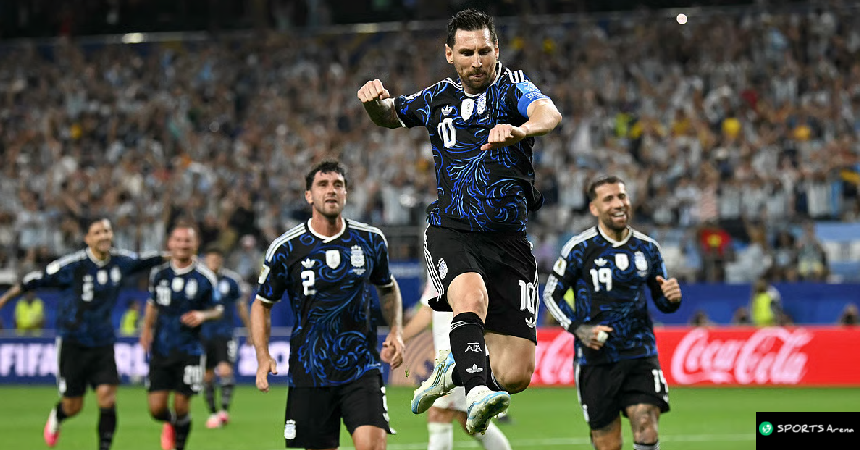
Argentina’s biggest challenge will be maintaining a more disciplined midfield structure. Though they have relied more on central play than width throughout the tournament — partly due to a lack of standout wingers and a tendency to sit in low blocks — one of their key tasks will be to quickly move the ball to Messi or Álvarez in the opponent’s final third after winning it back from Rodri or intercepting Spanish attacks. From there, the rest should take care of itself.
Meanwhile, a potential weakness in Spain’s setup was exposed in the France match — their defense can struggle to reorganize quickly once out of shape, at which point they can lose control. Additionally, Spain’s center-backs appear more comfortable stepping up to anticipate the ball than dropping back toward their own goal. These vulnerabilities could tip the balance in Argentina’s favor in the final.