






Argentina are preparing to face England in the World Cup semi-finals. But before the action begins on the pitch, the refereeing and VAR controversies surrounding the reigning world champions’ campaign have intensified. Some on social media have mocked the team, giving them the nickname “Vargentina.” Amid the furore, former FIFA referee Cristina Ankel has raised serious questions about a new and largely untested interpretation of VAR.
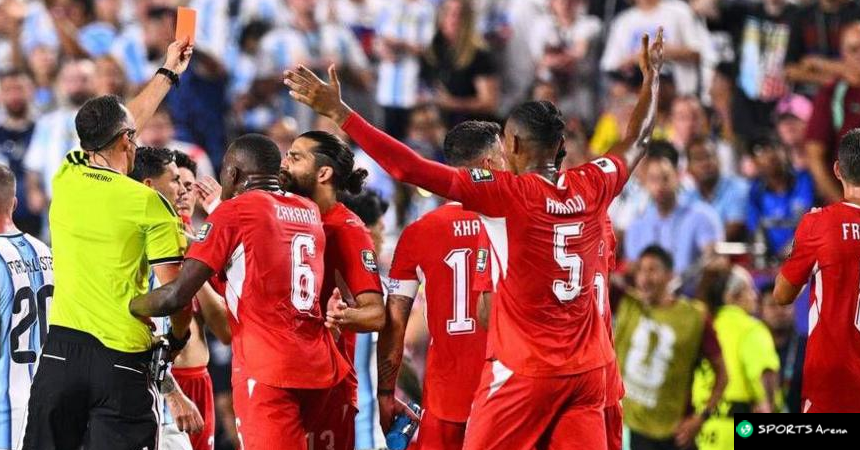
The quarter-final between Argentina and Switzerland was at the heart of the latest controversy. In the 72nd minute, referee João Pinheiro showed a yellow card to Argentina’s Leandro Paredes following a collision with Swiss forward Breel Embolo.
Following a VAR review, however, the decision was reversed entirely. Paredes’ card was rescinded and Embolo was instead shown a yellow card for his conduct during the incident. As it was his second booking of the match, the Swiss striker was sent off.
The incident came just five minutes after Switzerland had equalised. Despite finishing with ten men, Switzerland held Argentina until extra time, but the Albiceleste eventually won 3-1 to advance to the semi-finals. Swiss coach Murat Yakin described the use of VAR in that decision as “unacceptable.”
This is where Ankel, who has been working as an ITV rules analyst at this World Cup, takes issue. According to her, what occurred went beyond merely correcting a case of mistaken identity. The foul decision itself, the direction of the free kick and the nature of the original offence were all changed — not just the identity of the offending player.
Ankel argued that under this interpretation, VAR is no longer simply correcting clear and obvious errors but is effectively re-refereeing the match. She compared the expansion of the VAR protocol to a “gunpowder plot” — implemented with little or no testing or transparency.
Argentina’s performances have been under scrutiny since the group stage. In the match against Algeria, opposing captain Aïssa Mandi was not carded after Lionel Messi’s boot made contact with his foot. Algeria subsequently filed a formal complaint about the refereeing of that match.
Further controversy arose in the round of 16 against Egypt, where a VAR review led to the disallowance of an Egyptian goal and a late penalty appeal was rejected. The Egyptian Football Association claimed that several key decisions had a material impact on the outcome of the match.
Ankel, however, stopped short of suggesting that Argentina were deliberately favoured. She said she saw no clear refereeing errors in either the Algeria or Egypt matches. Her primary concern is the inconsistent application of the rules and what she sees as contradictory decisions by FIFA on various incidents throughout the tournament.
She pointed to further inconsistencies in disciplinary decisions: a one-match ban imposed on the United States’ Folarin Balogun was overturned at the last minute, while England’s Jarell Quansah received a two-match suspension. For Ankel, incidents such as these have almost completely eroded the trust of football fans in the system.
When Reuters sought comment from FIFA on the latest controversy, the organisation referred journalists to previous statements by refereeing chief Pierluigi Collina. Collina rejected any suggestion of favouritism towards Argentina, insisting that the integrity of World Cup match officials is beyond question and that VAR made the correct decision in the case of Egypt’s disallowed goal.
As things stand, there is no substantiated evidence of deliberate bias in Argentina’s favour. But the questions raised by the Embolo red card incident go beyond any single team. Where VAR ends and a new parallel refereeing system begins has become one of the defining debates of the final stages of this World Cup