

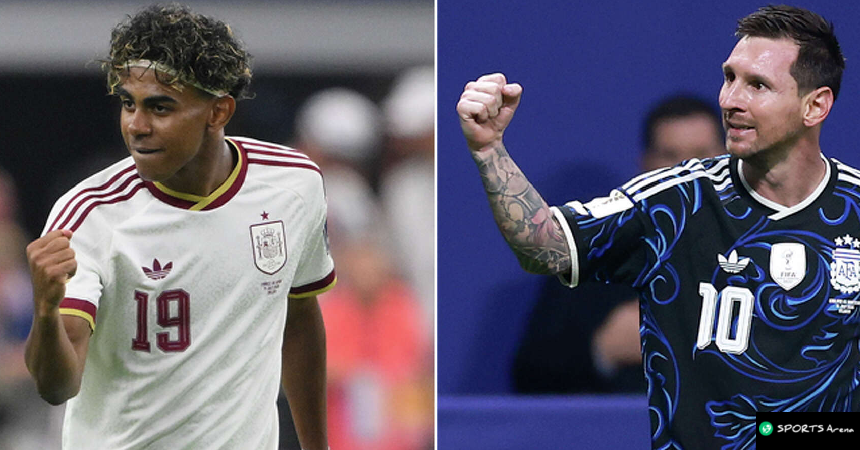
The curtain falls on the biggest event in World Cup history today. Argentina and Spain face off in a battle for football supremacy at MetLife Stadium at 1am Bangladesh time, where every touch of the ball will carry the weight of history, tradition, and pride between two nations who share a common language.
Today, football fans will watch the aggressive, emotional style of Argentina’s “La Nuestra” collide with the geometric precision of Spain’s “Tiki-Taka.” In the two dugouts sit two coaches with tactics as sharp as steel, each chasing the same goal from opposite ends. On the pitch, teammates from the same clubs will find themselves on opposing sides, working to dismantle each other’s game plans.
Today, the European champions face their South American rivals. Thirty-nine-year-old Lionel Messi will go head-to-head with 19-year-old Lamine Yamal. Luis de la Fuente will face off against Lionel Scaloni. Millions of eyes around the world will be fixed on MetLife’s green turf, as graduates of La Masia and Atlético Madrid’s academy alike refuse to let fans blink. Every turn, every moment, is set to stir emotion — moving some to tears, keeping others on the edge of their seats. Not a single second of the 90 minutes is likely to go to waste; instead, it promises memories to last a lifetime.
Who will lift the trophy? Will Argentina add another star to their jersey, or will Spain claim the title for the second time? We’ll have to wait until the final whistle to find out — but tonight’s contest promises to be a clash of contrasting strategies.
Spain like to dominate possession and play short passes, a style they’ve maintained throughout the tournament, averaging 63.7 percent possession across seven matches. This approach wears opponents down both physically and mentally, as Spanish players weave intricate passing patterns that force opponents into constant chasing. But their game isn’t just about squeezing the opposition or waiting for openings — Spain’s movement is highly dynamic, with players constantly interchanging positions to break through defensive lines.
Spain have also thrived with overlapping full-backs — Pedro Porro’s goal against France in the semi-final came exactly that way. On the opposite flank, Marc Cucurella has been similarly active, making 139 runs in behind the opposition defense, the fifth-most of any player in the tournament. Despite this level of attacking movement, opposing teams have struggled to track Spain’s runners or decide who to mark.
Spain’s hunger for possession is matched by their desire to win it back. De la Fuente’s forwards press aggressively, while center-backs Pau Cubarsí and Aymeric Laporte maintain a high defensive line, compressing space and pinning opponents into their own half. Rodri ties it all together — his positional awareness is central to shutting down opposition counter-attacks.
As for Argentina’s likely approach against Spain, they may look to exploit the same mistake England made late in the semi-final: if Spain sit back to defend, Argentina have enough midfield quality to dominate possession and create chance after chance. Their average of 5.4 passes per counter-attack tells its own story — they can patiently work opponents until an opening appears.
These combinations are centered mainly around the midfield, where Messi typically operates. Argentina rely far less on wide areas than most other teams — Messi remains the side’s biggest star, either scoring himself or creating for teammates. Notably, 12 of Argentina’s 19 goals this tournament have come after the 75th minute.
While Messi’s extraordinary talent has driven Argentina to the final, his physical limitations at 39 mean the team can’t replicate Spain’s aggressive, high-pressing style. Argentina win the ball back in the final third just 2.9 times per match, almost half Spain’s rate. Instead, they tend to concede some ground and engage in tighter tackles once the ball reaches midfield.
Despite being one of the smaller teams in the tournament physically, Argentina have thrived in the air, scoring four headed goals — three of which, including Lautaro Martínez’s last-minute winner against England, came from Messi’s crosses. Though they build mainly through the middle, they remain equally dangerous out wide thanks to Messi’s precise delivery.
The focal points for both sides are clear, but it would be a mistake to dismiss either team as a “one-man show.” Julián Álvarez brings energy and quality up front for Argentina, Enzo Fernández has a habit of scoring crucial late goals, and Emiliano Martínez remains a reliable presence between the posts.
Spain may be the more complete, organized side, but Argentina possess an indomitable resilience and a near-magical ability to turn matches on their head through individual brilliance whenever needed.
Scaloni has built his entire system around Messi. Currently joint-leader in the Golden Boot race with eight goals (level with Mbappé), Messi has scored or assisted 12 of Argentina’s 19 goals this tournament. He remains the team’s chief creator and biggest threat, leading the side in shots and chances created per 90 minutes.
Having spent much of the tournament walking around the pitch conserving energy, Messi might appear, to the casual observer, no longer able to match the pace and physicality of elite football at 39. But that’s precisely the illusion — he tends to emerge exactly when his team needs him most. Against England, he completed 10 successful dribbles, more than any other player managed in any single match across the entire tournament. His ability to shield the ball with remarkable strength and turn in any direction remains as sharp as ever.
While Yamal is Spain’s biggest individual weapon, De la Fuente’s most indispensable player is Rodri. The Manchester City midfielder is the architect of Spain’s play, controlling tempo and staying composed under pressure throughout matches. According to FIFA data, Rodri completes an average of 47 passes per match even under pressure — more than any other player in the tournament.
As composed in possession as he is relentless out of it, Rodri is devastating when it comes to winning the ball back. He reads passing lanes with remarkable anticipation and wins physical duels with ease. His tackle and interception map shows he covers every blade of grass — and he’s especially crucial to Spain’s counter-press, winning two tackles per match in the final third, the most of any player heading into the final.
Spain, who have conceded just one goal across seven matches this tournament, are chasing their second World Cup title, 16 years after their first triumph in 2010. Argentina, meanwhile, are aiming to defend the crown they won in 2022 and claim their fourth title overall. It remains to be seen how Spain — who suffered a shock defeat in their opening match of the tournament — will fare, and just how far Argentina can go in their bid for glory.